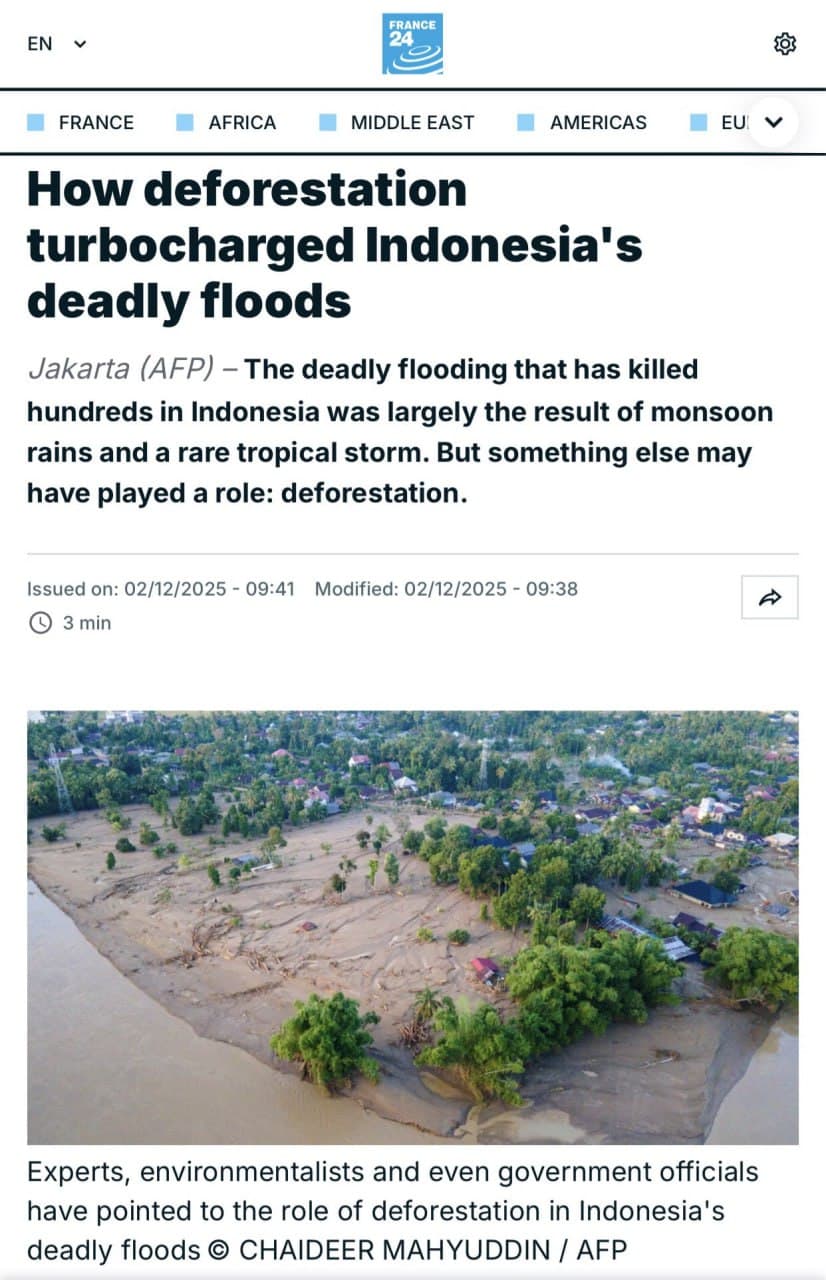
700 Dead in Indonesia Flooding Linked to Deforestation and Logging
In a tragic environmental disaster, recent flooding in Indonesia has resulted in the deaths of approximately 700 individuals. The catastrophic flooding, which primarily affected the Batang Toru region in North Sumatra, has been exacerbated by extensive deforestation practices in the area. Reports indicate that seven logging companies were actively operating in Batang Toru at the time of the flooding, with additional concerns regarding illegal logging activities that remain unaccounted for.
Key Details
The flooding in Batang Toru has been described as one of the worst natural disasters in the region"s history, with an estimated death toll of 700 people. This disaster has raised alarms among environmentalists and local communities, who attribute the severity of the flooding to the rampant deforestation occurring in the area. The logging activities are primarily concentrated in regions that are less vulnerable to soil loss, which are often the most fertile and stable terrains. As these areas are depleted, logging operations are increasingly moving to the more vulnerable mountain sides, where the consequences of deforestation can be catastrophic.
In addition to the logging companies, the region is also home to a hydroelectric dam project and a gold mining operation, both of which contribute to the environmental degradation and increased risk of flooding. The combination of these industrial activities has created a precarious situation for local ecosystems, leading to significant soil erosion and loss of natural barriers that would typically mitigate flooding.
Experts warn that the long-term implications of this deforestation are dire. Once the forests are cleared, it may take enormous resources and a concerted effort to reforest the damaged mountain soils. However, there are concerns that Indonesia lacks the necessary resources and political will to undertake such extensive reforestation efforts. The ongoing issues of irresponsible resource management, unsustainable population growth, and ineffective governance are likely to lead to unprecedented ecological devastation in the region.
Background
Deforestation in Indonesia has been a longstanding issue, driven by the demand for timber, agricultural expansion, and mining activities. The Batang Toru region, known for its rich biodiversity and unique ecosystems, has been particularly vulnerable to these pressures. The recent flooding serves as a stark reminder of the consequences of unchecked industrial activity and environmental mismanagement. While climate change is often cited as a contributing factor to extreme weather events, some experts argue that the immediate causes of the flooding in Batang Toru are directly linked to human actions, particularly deforestation and land use changes.
Impact
The impact of this disaster extends beyond the immediate loss of life. The flooding has disrupted local communities, destroyed infrastructure, and led to significant economic losses. As the region grapples with the aftermath, there are urgent calls for better governance and sustainable practices to prevent future disasters. The situation in Batang Toru highlights the critical need for comprehensive environmental policies and enforcement mechanisms to protect Indonesia"s natural resources and ensure the safety of its population.
As previously reported, the challenges faced by Indonesia in addressing these environmental issues are compounded by political and economic factors. The need for effective leadership and international support is crucial in mitigating the effects of deforestation and promoting sustainable development in the region.
In conclusion, the tragic flooding in Batang Toru serves as a wake-up call for Indonesia and the global community regarding the urgent need for sustainable environmental practices and effective governance to prevent further ecological disasters.
![[Video] Mount Etna erupts in Sicily, lava reaches 400 meters, yellow alert issued](/_next/image?url=%2Fapi%2Fimage%2Fthumbnails%2Fthumbnail-1766917884234-2sqn18-thumbnail.jpg&w=3840&q=75)
![[Video] Hawaii's Kilauea volcano erupts, fountains reach 70 ft, USGS reports](/_next/image?url=%2Fapi%2Fimage%2Fthumbnails%2Fthumbnail-1766574042820-tucull-thumbnail.jpg&w=3840&q=75)


![[Video] Gunfire between Iraqi security forces and Sadr militias in Baghdad](/_next/image?url=%2Fapi%2Fimage%2Fthumbnails%2Fthumbnail-1768343508874-4redb-thumbnail.jpg&w=3840&q=75)