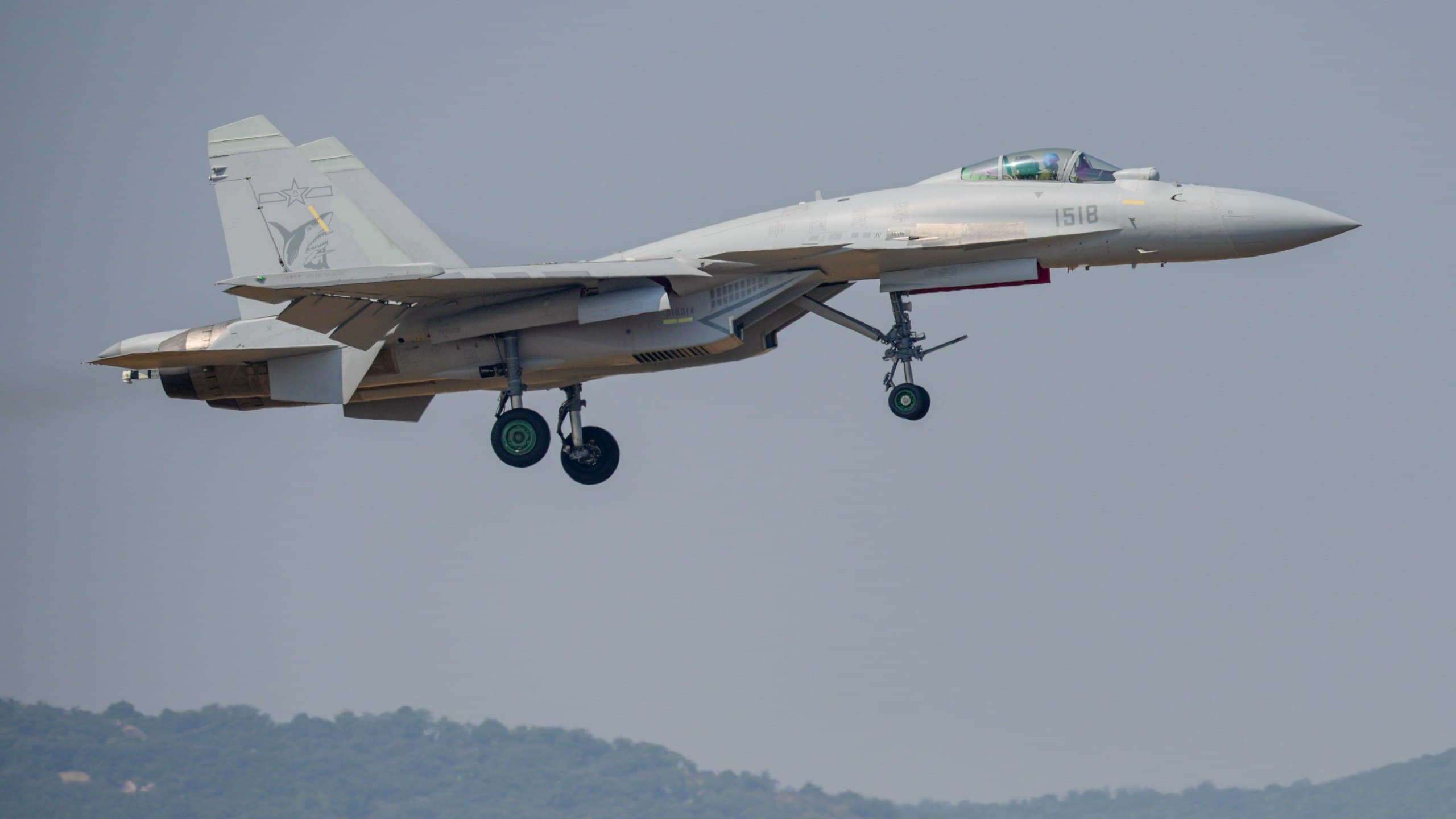
Chinese J-15 Jets Lock Fire-Control Radar onto Japanese F-15s Over International Waters
In a significant military encounter, Chinese People"s Liberation Army Navy (PLAN) J-15 fighter jets from the Liaoning aircraft carrier locked their fire-control radar onto Japanese F-15 fighter jets over international waters southeast of Okinawa on December 6, 2025. This incident was confirmed by Japan"s Defense Ministry on Sunday, December 7, 2025. The event marks a notable escalation in military tensions in the region, highlighting the ongoing complexities of Sino-Japanese relations.
Key Details
The radar lock-ons occurred on two separate occasions during the day. The first incident took place at approximately 4:32 p.m. local time and lasted for about three minutes. The second lock-on occurred around 6:37 p.m. and lasted for approximately 30 minutes. Fortunately, there were no reported injuries or damage resulting from these encounters. In response to the situation, the Japan Air Self-Defense Force scrambled its F-15 jets to monitor the Chinese military exercises, which involved three Chinese destroyers operating in the vicinity.
Japanese Prime Minister Sanae Takaichi characterized the radar lock-ons as "extremely unfortunate" and expressed Japan"s strong protest against the actions of the Chinese military. Takaichi emphasized the need for a "calm and firm" response to ensure the safety and security of Japanese airspace. Defense Minister Shinjiro Koizumi also condemned the actions, labeling them as "regrettable" and beyond the norms of safe aviation practices.
In a counter-response, the Chinese Navy took to the social media platform WeChat to defend its actions, accusing the Japanese aircraft of engaging in "dangerous interference" with its training operations. The Chinese statement denied Tokyo"s claims and suggested that the Japanese jets were the provocateurs in this incident.
Background
The Liaoning, China"s first aircraft carrier, has been a focal point of the country"s naval expansion and modernization efforts. The J-15 fighter jets, which are designed for carrier operations, represent a significant advancement in China"s military capabilities. The ongoing military exercises conducted by the Chinese Navy have raised concerns among neighboring countries, particularly Japan, which has a history of territorial disputes with China, especially in the East China Sea.
This incident comes amid heightened tensions in the Asia-Pacific region, where military activities by China have increasingly drawn scrutiny from the United States and its allies. Japan, under its pacifist constitution, has been enhancing its defense posture in response to perceived threats from North Korea and China, leading to increased military cooperation with the United States and other regional partners.
What"s Next
The implications of this incident could be far-reaching, as it may lead to increased military vigilance and readiness among Japanese forces. Japan"s government is likely to continue monitoring Chinese military activities closely, particularly in the context of its national security strategy. The incident may also prompt discussions among allied nations regarding collective security measures and responses to similar provocations in the future.
As previously reported, the evolving dynamics in the Asia-Pacific region necessitate a careful balance between military preparedness and diplomatic engagement to prevent potential conflicts. The international community will be watching closely to see how Japan and China navigate this latest episode in their complex relationship.
For more on related coverage, see our article on recent developments in international security strategies.

![[Video] Heavy clashes and gunfire reported in Baghdad, Iraq](/_next/image?url=%2Fapi%2Fimage%2Fthumbnails%2Fthumbnail-1768342239932-848qsh-thumbnail.jpg&w=3840&q=75)




![[Video] Gunfire between Iraqi security forces and Sadr militias in Baghdad](/_next/image?url=%2Fapi%2Fimage%2Fthumbnails%2Fthumbnail-1768343508874-4redb-thumbnail.jpg&w=3840&q=75)