Egypt Pressures Haftar to Halt RSF Supply Road to UAE in Kufrah
In a significant development in North African geopolitics, Egypt is reportedly exerting pressure on Khalifa Haftar and the Libyan National Army (LNA) to cease their support for a supply route to the Rapid Support Forces (RSF) for the United Arab Emirates (UAE) in the Kufrah region of Libya. This move underscores Egypt"s strategic interests in Sudan and its broader regional dynamics, particularly concerning its neighbor, Ethiopia.
Key Details
Egypt"s intervention is rooted in its concerns about the RSF"s supply road, which connects Kufrah in Libya to Darfur in Sudan. This route is perceived as a potential threat to Egypt"s national security, especially given its proximity to the Egyptian border. The RSF, a paramilitary group in Sudan, has been involved in various conflicts and has received support from the UAE, complicating the regional power dynamics.
Egypt"s strategic interest in Sudan is amplified by its ongoing tensions with Ethiopia over the Grand Ethiopian Renaissance Dam (GERD), which threatens Egypt"s water supply from the Nile River. As Sudan shares a border with Ethiopia, Cairo is keen to maintain a stable relationship with Sudan while balancing its economic and military ties with the UAE. This delicate balancing act is crucial for Egypt, as it navigates its dependencies and alliances in a region marked by instability.
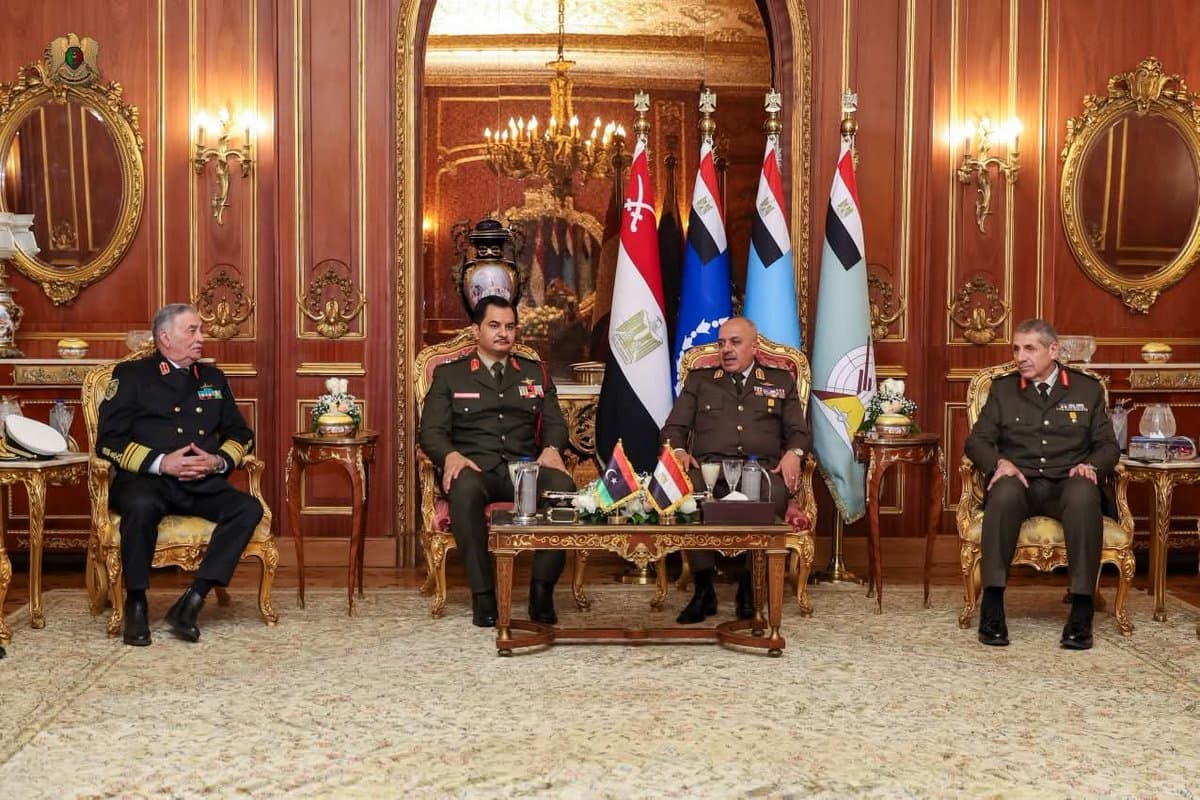
In December 2025, Khalifa Haftar visited Cairo, where reports indicated that the meeting was tense. Egyptian officials reportedly urged Haftar to alter his policies regarding the RSF and the supply route. This pressure reflects Egypt"s desire to mitigate any destabilizing influences that could arise from the UAE"s involvement in Libyan affairs.
Recently, Saddamm Haftar, the son of Khalifa Haftar and a potential future leader of the LNA, also visited Egypt. This visit came at a time when Egypt and Saudi Arabia are reportedly collaborating to counteract the destabilizing actions of the UAE in the region. Sources suggest that Egypt and Saudi Arabia may have threatened Haftar with support for factions in western Libya if he does not comply with their demands.
Background
The geopolitical landscape of North Africa has been increasingly complex, with various nations vying for influence in Libya and Sudan. The UAE has been known to support various factions within Libya, which has led to a fragmented political environment. Egypt"s involvement is primarily driven by its need to secure its borders and maintain stability in the region, especially in light of the ongoing conflict in Sudan and the implications of the GERD dispute with Ethiopia.
Egypt"s military relationship with Sudan has historically been significant, and Cairo has sought to strengthen this alliance amidst growing tensions in the region. The RSF"s activities in Sudan, particularly their connections to the UAE, pose a challenge to Egypt"s strategic interests, prompting Cairo to take a more active role in Libyan affairs.
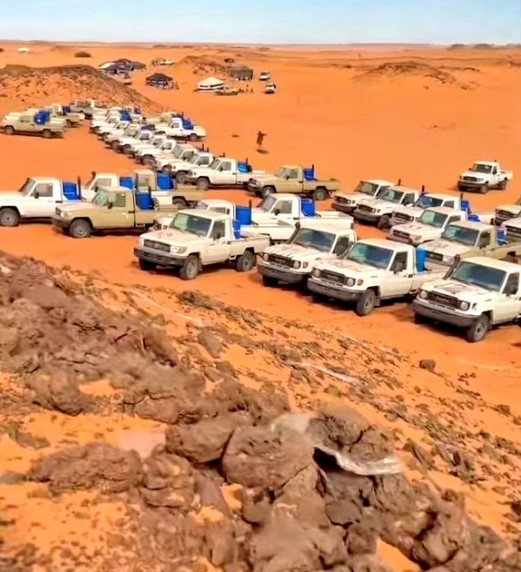
Image for Egypt pressures Haftar to halt RSF supply road to UAE in Kufrah
What"s Next
The implications of Egypt"s pressure on Haftar and the LNA could be far-reaching. If Haftar complies with Egypt"s demands, it may lead to a shift in the dynamics of power within Libya, potentially strengthening the eastern factions aligned with Cairo. Conversely, if Haftar resists, it could exacerbate tensions between Egypt and the UAE, further complicating the already volatile situation in Libya and Sudan.
As the situation unfolds, observers will be closely monitoring the interactions between Egypt, Sudan, and the UAE, as well as the potential responses from Haftar and the LNA. The evolving geopolitical landscape in North Africa will likely continue to influence regional stability and security.
For related coverage on the geopolitical tensions in the region, see our article on recent developments regarding Saudi Arabia and the UAE.

![[Video] Heavy clashes and gunfire reported in Baghdad, Iraq](/_next/image?url=%2Fapi%2Fimage%2Fthumbnails%2Fthumbnail-1768342239932-848qsh-thumbnail.jpg&w=3840&q=75)


![[Video] Gunfire between Iraqi security forces and Sadr militias in Baghdad](/_next/image?url=%2Fapi%2Fimage%2Fthumbnails%2Fthumbnail-1768343508874-4redb-thumbnail.jpg&w=3840&q=75)