Fuel Blockade by JNIM Disrupts Mobility and Services in Mali
Date: December 1, 2025
Author: Jessica Martinez-Thompson
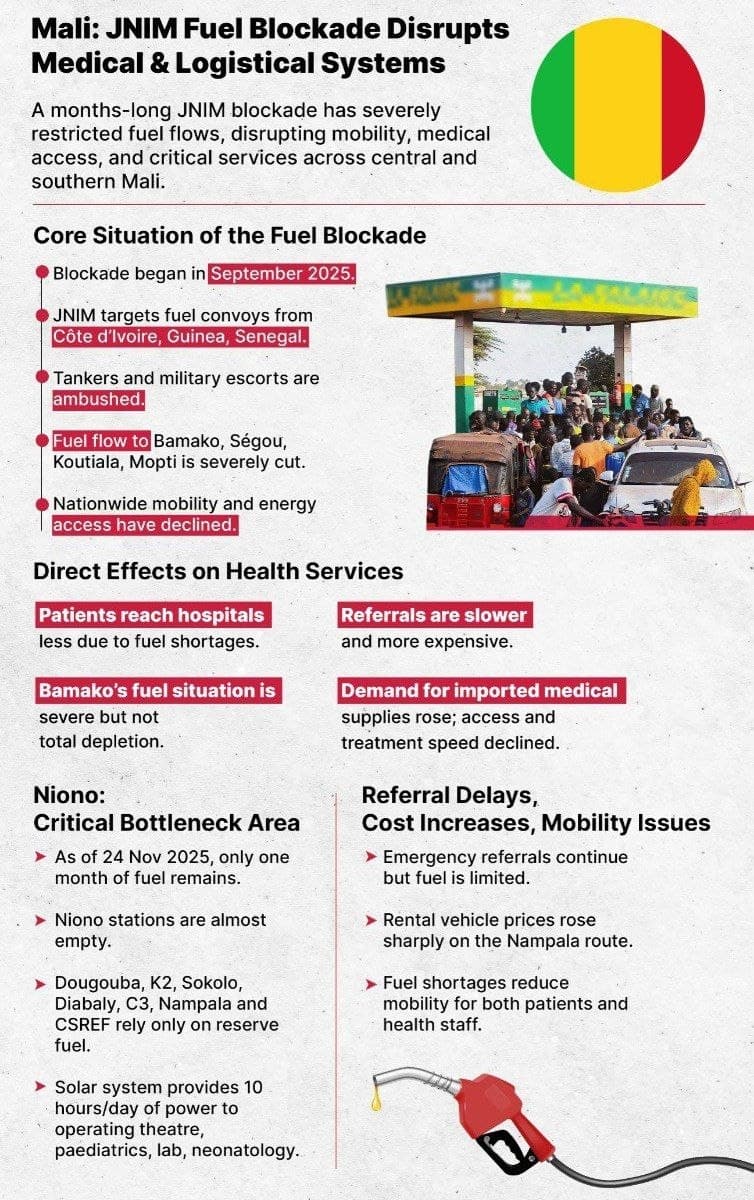
A prolonged fuel blockade enforced by the terrorist organization Jama’at Nusrat al-Islam wal-Muslimin (JNIM) is severely impacting Mali, leading to significant restrictions on fuel flows and disrupting mobility across key regions of the country. This blockade has resulted in acute fuel shortages, particularly in major cities, crippling transportation networks, market activities, and essential public services.
Key Details
The blockade, attributed to JNIM, has intensified over recent months, with repeated ambushes on fuel convoys significantly choking off deliveries. As a result, major urban centers are experiencing critical shortages of fuel, which is essential for transportation, commerce, and the functioning of public services. The situation has escalated to a point where hospitals are among the hardest hit, facing dire consequences due to dwindling fuel reserves.
Hospitals across Mali are reporting a range of challenges stemming from the fuel blockade. These include delayed patient referrals, which can be life-threatening in emergencies, rising operational costs due to the need to procure fuel at inflated prices, and a general decline in access to medical care as facilities struggle to maintain basic operations. The fuel shortages have made it increasingly difficult for healthcare providers to transport patients and supplies, further exacerbating the humanitarian crisis.
Authorities in Mali have issued warnings that the situation is rapidly worsening. Humanitarian organizations are grappling with the escalating supply crisis, struggling to maintain critical services in the face of these challenges. The blockade not only affects transportation but also has broader implications for food security and public health, as market activities are disrupted and essential goods become increasingly scarce.
Background
JNIM, which is linked to al-Qaeda, has been active in the Sahel region, where it has conducted various attacks and enforced blockades that disrupt local economies and governance. The group"s actions have contributed to a deteriorating security situation in Mali, which has been grappling with ongoing conflicts and instability since 2012. The fuel blockade is part of a broader pattern of violence and intimidation that has characterized JNIM"s operations in the region.
Impact
The implications of the fuel blockade are profound, affecting not only the immediate availability of fuel but also the overall stability of the region. As transportation becomes increasingly difficult, the movement of goods and people is severely hampered, leading to economic stagnation in affected areas. The healthcare system, already under strain from limited resources, faces additional pressure as hospitals struggle to operate without reliable access to fuel.
As previously reported, the humanitarian situation in Mali is precarious, with various organizations working to provide assistance amidst ongoing conflicts. The current fuel blockade by JNIM represents a significant escalation in the challenges faced by both local authorities and humanitarian actors, who are striving to deliver essential services to the population.
In light of these developments, it is crucial for the international community to monitor the situation closely and consider interventions that can alleviate the suffering of those affected by the blockade. The ongoing crisis highlights the urgent need for a comprehensive approach to address the underlying issues of security, governance, and humanitarian assistance in Mali.
For more information on related coverage, see our article on recent developments in public safety and security measures.



![[Video] Gunfire between Iraqi security forces and Sadr militias in Baghdad](/_next/image?url=%2Fapi%2Fimage%2Fthumbnails%2Fthumbnail-1768343508874-4redb-thumbnail.jpg&w=3840&q=75)