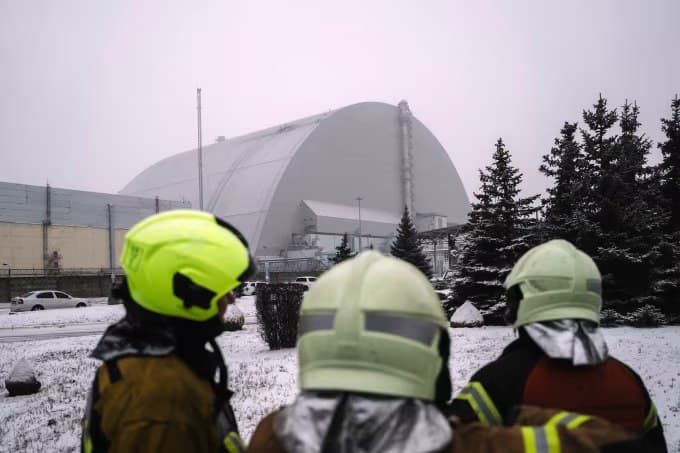
IAEA Warns Chernobyl"s New Safe Confinement Can No Longer Contain Radiation After Drone Strike
On December 7, 2025, the International Atomic Energy Agency (IAEA) issued a critical warning regarding the New Safe Confinement (NSC) structure at the Chernobyl Nuclear Power Plant, stating that it has lost its primary safety functions, including the ability to contain radiation. This alarming development follows a drone strike that occurred on February 14, 2025. The IAEA attributed the damage to the ongoing conflict in Ukraine, which has seen escalating tensions between Ukrainian forces and Russian military operations.
Key Details
The IAEA, an international organization that seeks to promote the peaceful use of nuclear energy and prevent its use for military purposes, reported that the NSC, designed to encase the remains of the reactor that exploded in 1986, has sustained severe damage. The NSC was constructed to provide a robust barrier against the release of radioactive materials from the site of the catastrophic nuclear disaster. The agency emphasized that while no radiation leaks have been detected following the drone strike, the integrity of the structure is compromised, necessitating urgent renovations to mitigate long-term risks associated with radiation exposure.
Ukraine has attributed the drone strike to Russian forces, a claim that Russia has denied. The ongoing conflict in Ukraine has raised concerns about the safety and security of nuclear facilities in the region, particularly those affected by military actions. The Chernobyl disaster, which occurred on April 26, 1986, remains one of the worst nuclear accidents in history, leading to widespread radioactive contamination and long-term health effects for those exposed to radiation.
Background
The New Safe Confinement was completed in 2016, representing a significant engineering achievement aimed at securing the radioactive remains of the Chernobyl reactor. The structure was designed to last for at least 100 years, providing a safe environment for the ongoing decommissioning of the site and the management of radioactive waste. The IAEA"s recent announcement raises serious concerns about the future safety of the Chernobyl site, particularly given the historical context of the 1986 disaster and the ongoing geopolitical tensions in the region.
The Chernobyl Nuclear Power Plant, located near the town of Pripyat in northern Ukraine, was the site of a catastrophic nuclear accident that resulted in the release of large quantities of radioactive particles into the atmosphere. The disaster forced the evacuation of thousands of residents and led to the establishment of a 30-kilometer exclusion zone around the plant, which remains largely uninhabited to this day.
What"s Next
The IAEA"s warning underscores the urgent need for renovations and repairs to the NSC to restore its protective functions. Without immediate action, the risk of radiation exposure could increase, posing potential health hazards to workers involved in the decommissioning process and to the surrounding environment. The international community is likely to monitor the situation closely, given the implications for nuclear safety and security in conflict zones.
As previously reported, the ongoing conflict in Ukraine has raised alarms about the safety of nuclear facilities, with similar situations being observed in other regions affected by military actions. The IAEA"s call for urgent renovations at Chernobyl may prompt discussions among international stakeholders regarding the protection of nuclear sites in conflict areas and the need for enhanced security measures to prevent further incidents.
For more on the geopolitical implications of military actions, see our coverage on recent developments in international relations.

![[Video] Heavy clashes and gunfire reported in Baghdad, Iraq](/_next/image?url=%2Fapi%2Fimage%2Fthumbnails%2Fthumbnail-1768342239932-848qsh-thumbnail.jpg&w=3840&q=75)




![[Video] Gunfire between Iraqi security forces and Sadr militias in Baghdad](/_next/image?url=%2Fapi%2Fimage%2Fthumbnails%2Fthumbnail-1768343508874-4redb-thumbnail.jpg&w=3840&q=75)