#BREAKING: Niger Imposes Mandatory Inspections on All Nigerian Goods at Border Entry Points
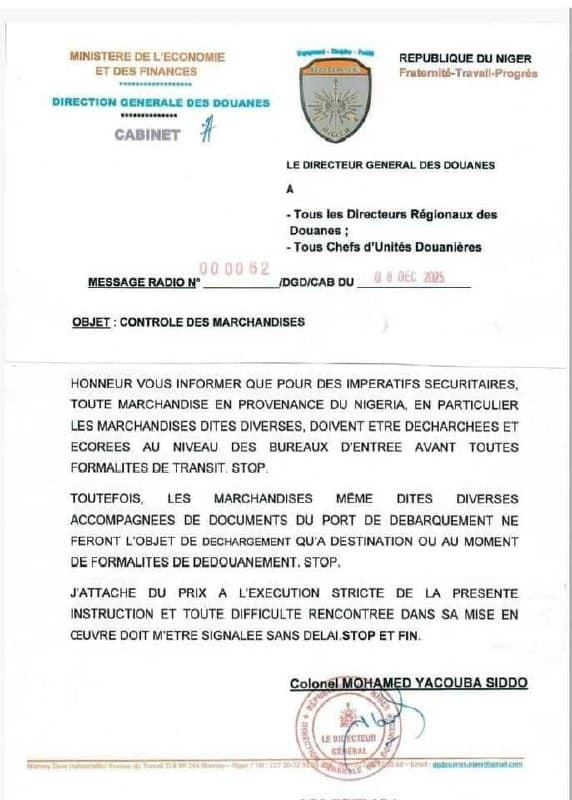
The government of Niger has implemented a new policy mandating that all goods originating from Nigeria undergo comprehensive inspections at border entry points. This directive was announced by the Ministry of Commerce and Industry of Niger and is aimed at addressing concerns regarding potential smuggling and other illicit activities that may occur along the shared, porous border between the two nations.
Key Details
The recent policy change requires that all Nigerian goods be fully offloaded and subjected to thorough inspections before they can enter Niger. This decision reflects the Nigerien government"s heightened vigilance in monitoring cross-border trade, particularly in light of ongoing issues related to smuggling and illegal activities that have been reported in the region.
Officials from the Ministry of Commerce and Industry have emphasized that these measures are temporary and non-discriminatory. They are designed specifically to enhance border security and vigilance without disrupting legitimate trade flows that are governed by the Economic Community of West African States (ECOWAS) protocols. The ECOWAS framework aims to promote economic integration and cooperation among member states, including Nigeria and Niger.
While the specific duration of the inspections has not been disclosed, the government has assured traders and the public that the policy is intended to be a precautionary measure rather than a permanent fixture. This approach aims to balance the need for security with the importance of maintaining healthy trade relations between Niger and Nigeria.
Background
Niger and Nigeria share a long and complex border that has historically been characterized by challenges such as smuggling and trafficking. The porous nature of the border has made it difficult for authorities to monitor and control the flow of goods and people between the two countries. In recent years, both governments have taken steps to enhance border security and combat illegal activities.
The decision to impose mandatory inspections comes at a time when regional security concerns are heightened, particularly in relation to the activities of armed groups and organized crime. The Nigerien government’s proactive stance reflects a broader trend among West African nations to strengthen border controls and enhance cooperation in combating transnational crime.
What"s Next
The implementation of mandatory inspections on Nigerian goods is expected to have significant implications for trade between Niger and Nigeria. Traders and businesses that rely on cross-border commerce may experience delays and increased costs due to the new inspection requirements. However, the Nigerien government has expressed its commitment to ensuring that legitimate trade continues to flow smoothly, in alignment with ECOWAS protocols.
As the situation develops, it will be crucial for both governments to communicate effectively with traders and the public to mitigate any potential disruptions. Stakeholders in the trade sector will be closely monitoring the impact of these inspections on their operations and may seek dialogue with government officials to address any concerns that arise.
For further insights into related developments in international relations and security, see our previous reports on recent developments in military aid and national security briefings by top officials.

![[Video] Heavy clashes and gunfire reported in Baghdad, Iraq](/_next/image?url=%2Fapi%2Fimage%2Fthumbnails%2Fthumbnail-1768342239932-848qsh-thumbnail.jpg&w=3840&q=75)


![[Video] Gunfire between Iraqi security forces and Sadr militias in Baghdad](/_next/image?url=%2Fapi%2Fimage%2Fthumbnails%2Fthumbnail-1768343508874-4redb-thumbnail.jpg&w=3840&q=75)