Trump Accuses Honduras of Election Rigging After Vote Count Halted
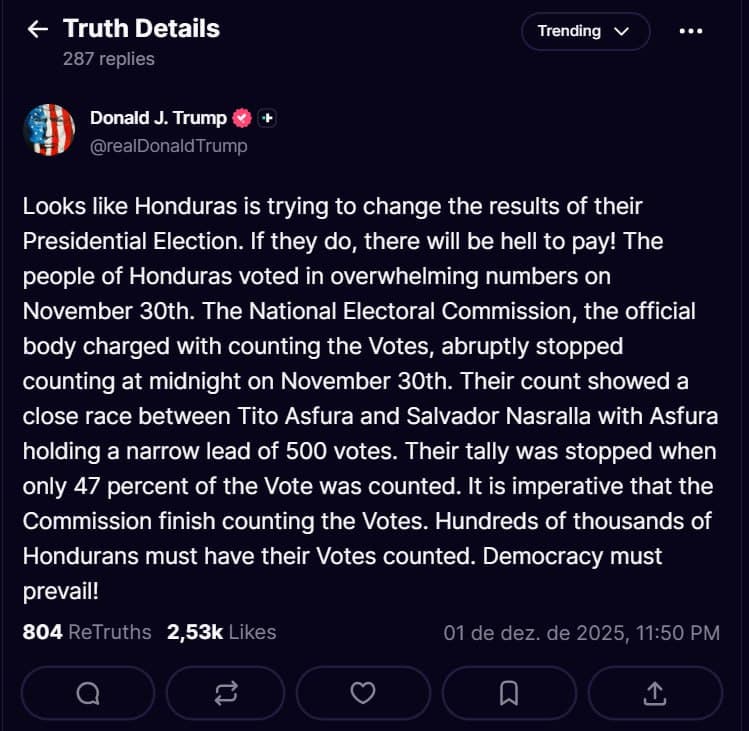
On December 2, 2025, U.S. President Donald J. Trump publicly accused the Honduran government of attempting to manipulate the results of the country"s presidential election. This accusation came after a significant delay in the vote counting process, which raised concerns about the integrity of the electoral process. The National Electoral Council of Honduras, the official body responsible for tallying votes, ceased counting at midnight on November 30, 2025, leading to widespread speculation about potential election rigging.
Key Details
President Trump expressed his concerns via social media, stating, "Looks like Honduras is trying to change the results of their Presidential Election. If they do, there will be hell to pay!" He emphasized the importance of counting every vote, noting that "the people of Honduras voted in overwhelming numbers" on the election day, November 30, 2025.
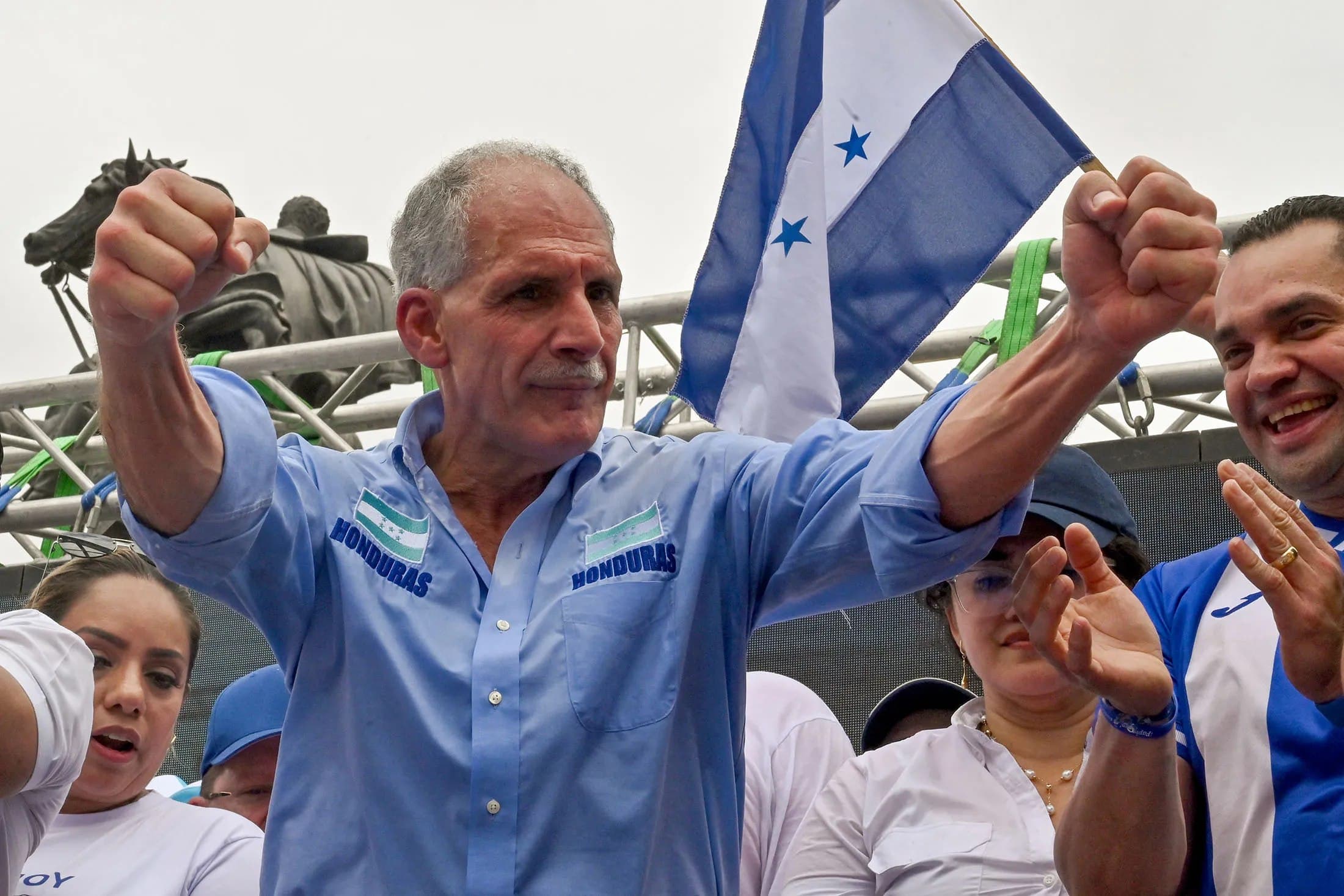
The National Electoral Council reported a close race between the two leading candidates, Tito Asfura and Salvador Nasralla. At the time the counting was halted, Asfura held a narrow lead of just 500 votes over Nasralla, with only 47 percent of the total votes counted. This abrupt stoppage in counting has raised alarms among observers and citizens alike, as hundreds of thousands of votes remain unaccounted for.
Trump"s statement highlighted the urgency of the situation, insisting that "it is imperative that the Commission finish counting the Votes." He underscored the necessity for democracy to prevail in Honduras, implying that any attempt to alter the election results would undermine the democratic process and the will of the Honduran people.
Background
The presidential election in Honduras is a critical event, as it reflects the political landscape of a country that has faced significant challenges in recent years, including corruption, violence, and economic instability. The National Electoral Council is tasked with ensuring a fair and transparent electoral process, and any perceived irregularities can lead to civil unrest and a loss of public trust in governmental institutions.
Honduras has a history of political turmoil, including a coup in 2009 that ousted then-President Manuel Zelaya. Since then, the country has struggled with governance issues, and allegations of election fraud have been a recurring theme in its political discourse. The current election cycle is particularly significant, as it follows a period of heightened political tension and public discontent over economic conditions and governance.
What"s Next
The situation in Honduras remains fluid as the National Electoral Council is expected to resume counting the votes. The international community, including the United States, will be closely monitoring the developments to ensure that the electoral process is conducted fairly and transparently. Any further delays or irregularities could lead to increased tensions within the country and may prompt international responses or interventions.
As previously reported, similar situations have arisen in other countries, leading to significant political consequences. The outcome of this election will not only impact Honduras but could also have broader implications for U.S.-Honduran relations and regional stability in Central America.
For further context on political developments, you can read about recent developments in U.S. politics and their potential implications.

![[Video] Putin ready to refrain from deep strikes in Ukraine during elections](/_next/image?url=%2Fapi%2Fimage%2Fthumbnails%2Fthumbnail-1766158260919-wednc8-thumbnail.jpg&w=3840&q=75)
![[Video] Gunfire between Iraqi security forces and Sadr militias in Baghdad](/_next/image?url=%2Fapi%2Fimage%2Fthumbnails%2Fthumbnail-1768343508874-4redb-thumbnail.jpg&w=3840&q=75)