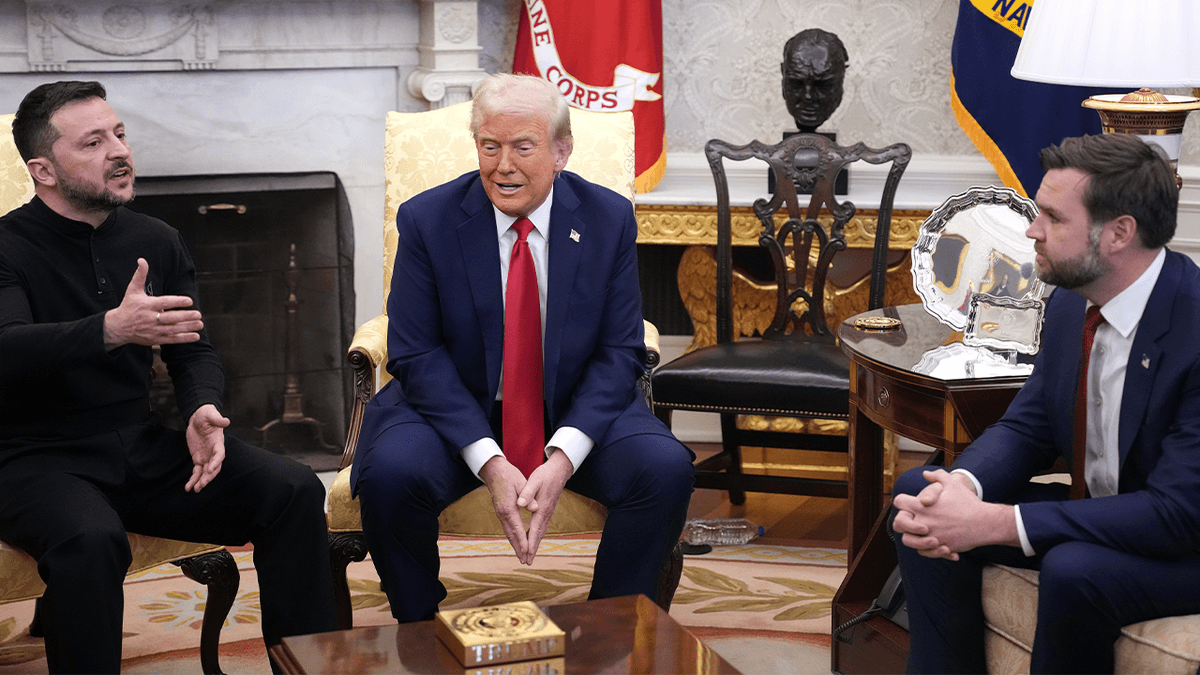
In a recent column published by The New York Post, former President Donald Trump has taken a strong stance against European involvement in the ongoing conflict in Ukraine. The article, which Trump himself shared on social media, criticizes European leaders for their perceived ineffectiveness and outlines a proposed 28-point peace plan that Trump believes could lead to a favorable resolution for the region.
Key Details
The New York Post article asserts that Trump"s team has developed a comprehensive 28-point peace plan aimed at resolving the conflict in Ukraine. The plan is described as a potential "triple victory" for European nations, suggesting that it could benefit their interests significantly. However, the article criticizes European leaders for their lack of engagement and describes them as "complete losers" in the context of the peace negotiations.
Trump is portrayed as "determined" to finalize a peace deal regarding Ukraine, indicating a proactive approach to diplomacy that excludes European nations from the discussions. The article further claims that Europeans are becoming "unnecessary in their own territory," implying a diminishing role for them in the geopolitical landscape surrounding the Ukraine conflict.
In a scathing critique, the article characterizes Europeans as "pacifists who want to prolong the war," suggesting that they lack the resolve to take decisive action. It also labels them as "warriors who don"t have swords," indicating a perceived inability to contribute effectively to military efforts. Moreover, the article accuses European leaders of being "strategists who don"t understand a thing about their own business," and describes them as "allies who plot intrigues and mock their American patron and defender" when he attempts to bring the conflict to a close.
Background
The ongoing conflict in Ukraine, which began in 2014 following Russia"s annexation of Crimea, has drawn significant international attention and involvement. The United States, under both the Trump and Biden administrations, has provided military and financial support to Ukraine in its struggle against Russian aggression. European nations have also been involved in supporting Ukraine, but tensions have arisen regarding the effectiveness and unity of their response.
Trump"s previous foreign policy decisions, including his approach to NATO and relations with European leaders, have often been contentious. His recent comments reflect a continuation of his critical perspective on European contributions to global security and diplomacy.

Image for Trump Excludes Europeans from Ukraine Peace Deal, Calls Them "Losers"
What"s Next
The implications of Trump"s proposed peace plan and his exclusion of European nations from the negotiations could significantly alter the dynamics of international relations regarding Ukraine. As Trump seeks to position himself as a key player in resolving the conflict, European leaders may need to reassess their strategies and roles in the ongoing situation. The effectiveness of Trump"s peace plan, should it be pursued, will depend on various factors, including the responses from both Ukraine and Russia, as well as the broader international community.
For further insights into Trump"s foreign policy and its implications, readers can refer to related coverage, such as the article on recent developments regarding U.S. relations with Venezuela.
![[Video] Gunfire between Iraqi security forces and Sadr militias in Baghdad](/_next/image?url=%2Fapi%2Fimage%2Fthumbnails%2Fthumbnail-1768343508874-4redb-thumbnail.jpg&w=3840&q=75)