UN General Assembly Adopts Resolution Demanding Russia Return Ukrainian Children
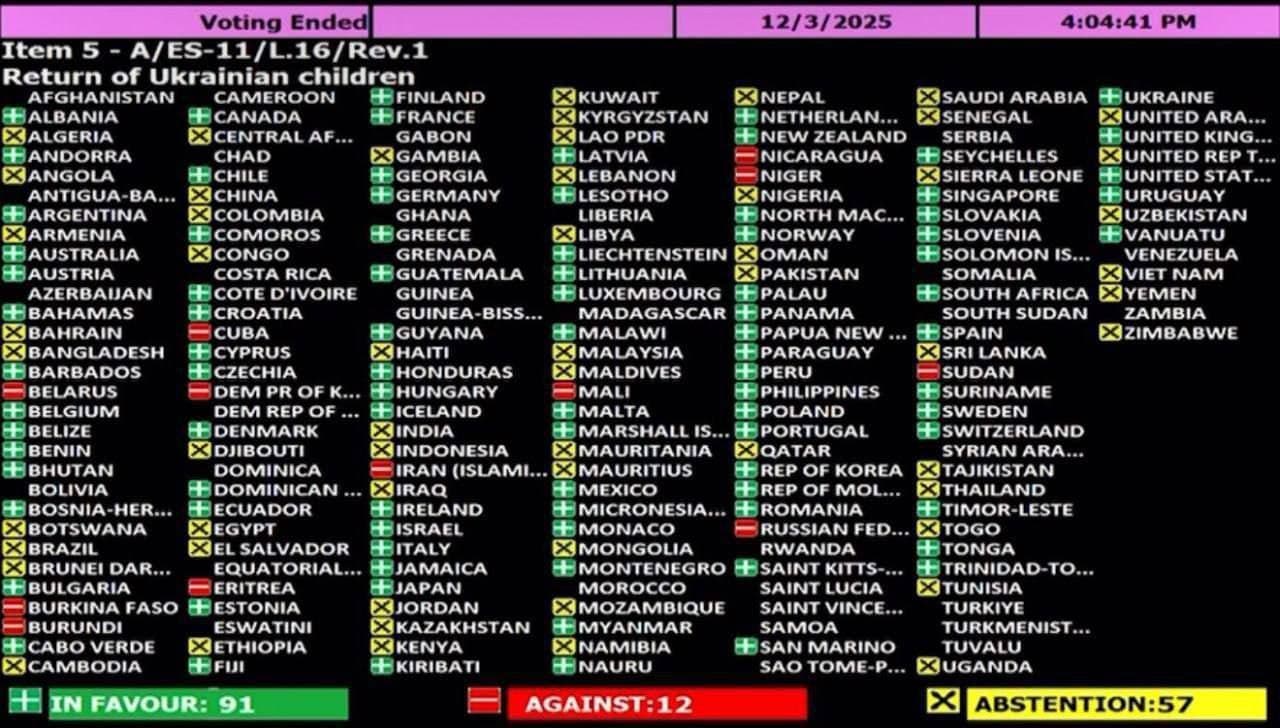
On December 3, 2025, the United Nations General Assembly passed a significant resolution urging Russia to return all Ukrainian children who have been forcibly transferred or deported since 2014. This resolution, titled "Return of Ukrainian Children," was adopted during the resumed 11th Emergency Special Session on Ukraine, where it garnered substantial support from member states. The vote concluded with 91 nations in favor, 12 against, and 57 abstentions, successfully achieving the required two-thirds majority for passage.
Key Details
The resolution emphasizes the urgent need for Russia to take immediate and unconditional action to return Ukrainian children who have been affected by the ongoing conflict. Since the annexation of Crimea in 2014, there have been numerous reports and allegations regarding the forced transfer and deportation of Ukrainian minors, which the UN has classified as violations of international law. The resolution highlights the international community"s commitment to protecting the rights and welfare of children amidst armed conflicts.
The voting results reflect a significant consensus among UN member states regarding the issue. With 91 votes in favor, the resolution received overwhelming support, indicating a strong international stance against the actions taken by Russia. The 12 votes against the resolution came from countries that have historically aligned with Russia or have been reluctant to confront its actions in Ukraine. The 57 abstentions suggest a mix of nations that may have reservations about the resolution"s implications or are navigating complex geopolitical relationships.
Background
The situation regarding Ukrainian children has been a contentious issue since the onset of the conflict in Eastern Ukraine and the annexation of Crimea by Russia in 2014. Reports from various human rights organizations and Ukrainian officials have documented cases of children being taken from their families and relocated to Russia or Russian-occupied territories. These actions have raised serious concerns about the well-being and rights of these children, as well as the broader implications for international law and human rights standards.
The UN"s resolution is part of a broader effort to address the humanitarian crisis resulting from the ongoing conflict in Ukraine. The international community has been increasingly vocal about the need for accountability and the protection of vulnerable populations, particularly children, who are disproportionately affected by war and displacement.
What"s Next
The adoption of this resolution is expected to prompt further discussions within the UN and among member states regarding the enforcement of international law in the context of the Ukraine conflict. It may lead to increased pressure on Russia to comply with international norms concerning the treatment of children in conflict zones. Additionally, the resolution could serve as a basis for future diplomatic efforts aimed at resolving the ongoing crisis and ensuring the safe return of displaced Ukrainian children to their families.
As the situation continues to evolve, the international community will likely monitor the implementation of this resolution closely, assessing its impact on the ground and the response from the Russian government. The resolution underscores the importance of collective action in addressing humanitarian issues arising from armed conflicts and the necessity of protecting the rights of children worldwide.
For more on related developments, see our coverage on recent developments in NATO"s military presence in Armenia and Ukrainian military advancements.

![[Video] Heavy clashes and gunfire reported in Baghdad, Iraq](/_next/image?url=%2Fapi%2Fimage%2Fthumbnails%2Fthumbnail-1768342239932-848qsh-thumbnail.jpg&w=3840&q=75)

![[Video] Gunfire between Iraqi security forces and Sadr militias in Baghdad](/_next/image?url=%2Fapi%2Fimage%2Fthumbnails%2Fthumbnail-1768343508874-4redb-thumbnail.jpg&w=3840&q=75)