U.S. Air Force F-16C Crashes Near Trona Airport, Pilot Ejected Safely
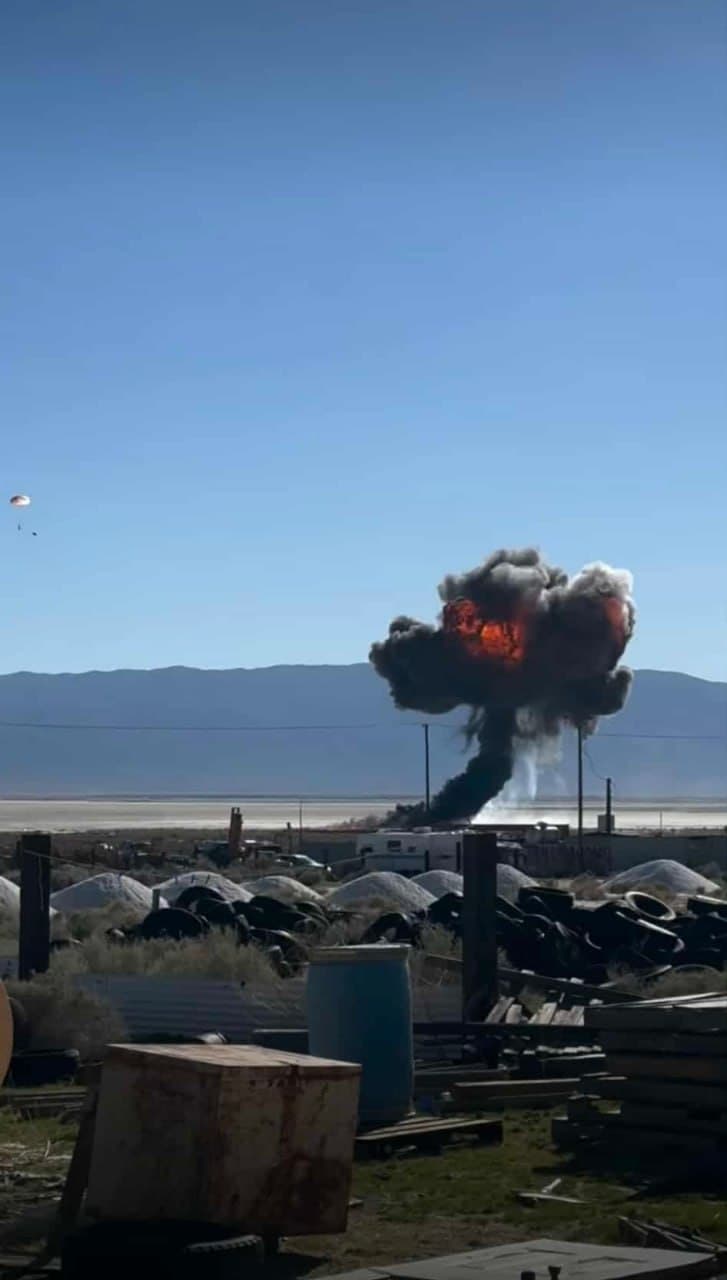
On Wednesday, December 3, 2025, an F-16C Fighting Falcon, designated as Thunderbird #5 and part of the U.S. Air Force Thunderbirds demonstration squadron, crashed in a remote area south of Trona Airport in San Bernardino County, California. The incident occurred in the vicinity of Death Valley, a region known for its harsh desert conditions. The aircraft had taken off earlier that day from Nellis Air Force Base in Nevada.
The crash site was identified as a dry lake bed, where the aircraft impacted the ground, resulting in a significant fireball. Fortunately, the pilot successfully ejected from the aircraft prior to the crash and sustained only minor injuries. Following the ejection, the pilot was transported to a hospital in Ridgecrest, California, for medical evaluation. As of the latest reports, no injuries to individuals on the ground have been documented.
Key Details
The F-16C Fighting Falcon is a multirole jet fighter that has been a key component of the U.S. Air Force since its introduction in the late 1970s. The Thunderbirds, the Air Force"s official aerial demonstration team, showcase the capabilities of the F-16 through precision flying and aerobatic maneuvers. The team is based at Nellis Air Force Base, which is located in Nevada and serves as a training ground for various air combat operations.
The crash occurred in the afternoon, although the specific time has not been disclosed. The location, Trona Airport, is situated near the eastern edge of the Sierra Nevada mountain range and serves as a small public-use airport primarily for general aviation. The proximity to Death Valley, one of the hottest places on Earth, adds to the challenging environmental conditions that pilots may face in the area.
Emergency response teams were mobilized to the crash site following the incident. The quick response ensured that the pilot received prompt medical attention, contributing to the positive outcome of the situation. The pilot"s minor injuries highlight the effectiveness of modern ejection systems in military aircraft, which are designed to enhance pilot safety during emergencies.
Background
The U.S. Air Force Thunderbirds have a storied history, having been established in 1953. The team performs at airshows and events across the United States and internationally, demonstrating the capabilities of the F-16 and promoting the Air Force"s mission. The F-16C model is known for its agility, speed, and advanced avionics, making it a preferred choice for both combat and demonstration purposes.
Crashes involving military aircraft, while rare, can occur due to a variety of factors, including mechanical failure, pilot error, or adverse weather conditions. The investigation into the cause of the crash will likely be conducted by the U.S. Air Force, which will assess the circumstances surrounding the incident to prevent future occurrences.
What"s Next
Following the crash, the U.S. Air Force will conduct a thorough investigation to determine the cause of the incident. This investigation will involve examining the aircraft"s systems, reviewing pilot actions, and analyzing environmental factors that may have contributed to the crash. The findings will be crucial in ensuring the safety of future operations and may lead to recommendations for changes in training or aircraft maintenance protocols.
The Thunderbirds are expected to continue their demonstration schedule, although any immediate impacts on their performances due to this incident have yet to be announced. The safety of pilots and crew remains a top priority for the U.S. Air Force, and the successful ejection of the pilot in this incident serves as a reminder of the importance of safety measures in military aviation.
For more information on related coverage, see recent developments in military aviation safety protocols.
![[Video] Helicopter crashes in Russia's Perm Krai, killing both onboard](/_next/image?url=%2Fapi%2Fimage%2Fthumbnails%2Fthumbnail-1767802840726-aqhg3-thumbnail.jpg&w=3840&q=75)


![[Video] Gunfire between Iraqi security forces and Sadr militias in Baghdad](/_next/image?url=%2Fapi%2Fimage%2Fthumbnails%2Fthumbnail-1768343508874-4redb-thumbnail.jpg&w=3840&q=75)