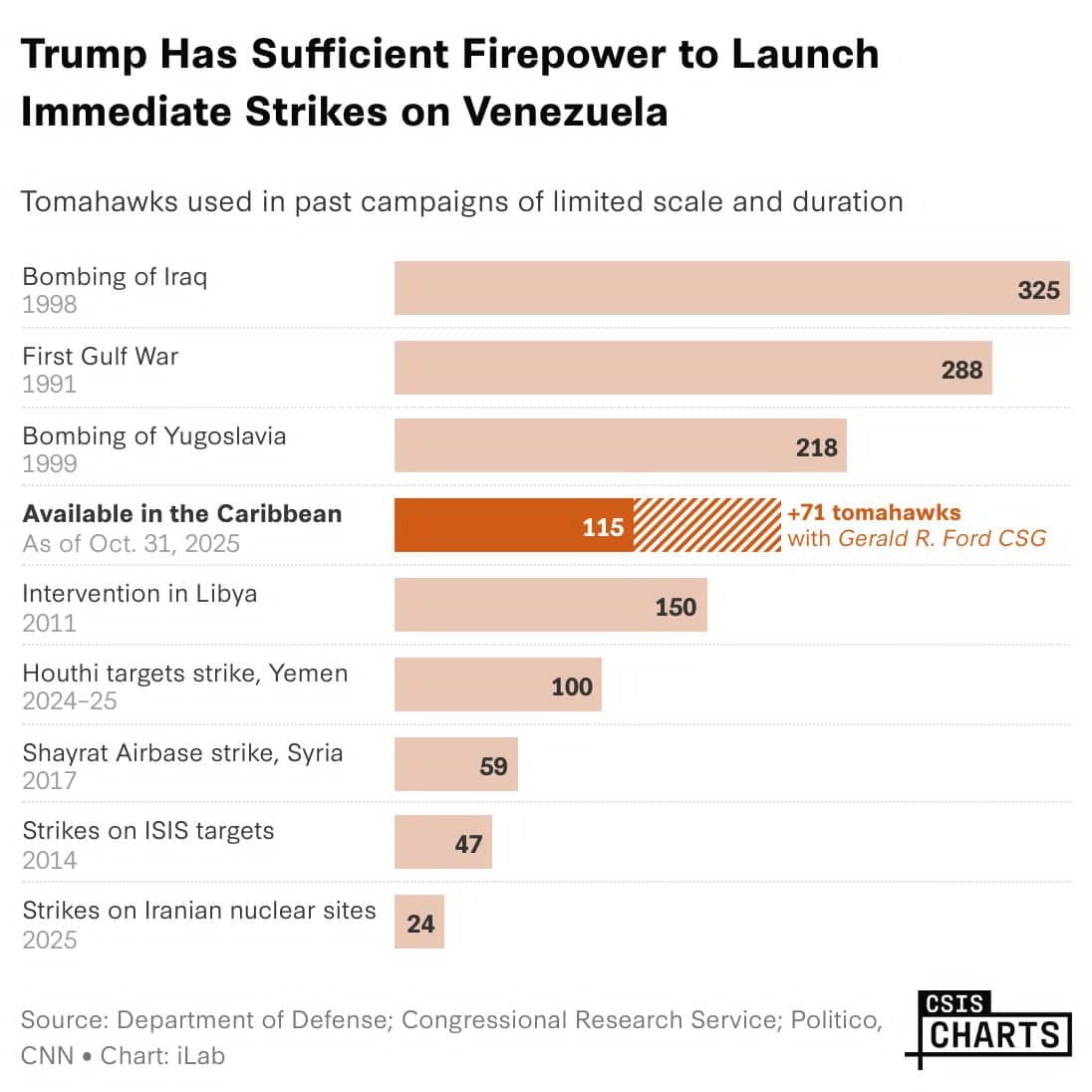
The United States is planning a significant bombing campaign in Venezuela, which is expected to be the most powerful U.S. bombing operation since the 1998 strikes in Iraq. This operation is characterized as a limited and surgical campaign.
Currently, there are more Tomahawk cruise missiles stationed in the Caribbean than were used in the recent strikes against the Houthis. The arrival of the USS Gerald Ford Carrier Strike Group and its escorts is anticipated to enhance U.S. military firepower in the region, surpassing the intervention in Libya, although it will still be less than the 1999 NATO bombing campaign in Yugoslavia.
The impact of the 1999 NATO bombing on Slobodan Milošević"s decision to withdraw from Kosovo remains a topic of debate. Milošević signed the Kumanovo Agreement after receiving guarantees from Russian envoy Viktor Chernomyrdin that Kosovo would not declare independence for at least three years and that Russian peacekeepers would be deployed in Prishtina.
Despite the "surgical" nature of the bombing, civilian casualties occurred, and some actions, such as the bombing of a train in Grdelica and attacks on Albanian refugees, have been criticized as potential war crimes. The bombing campaign significantly damaged Yugoslavia"s infrastructure, yet Milošević and the Yugoslav Army continued to resist until the Kumanovo Agreement was signed. He remained in power for another year before losing the 2000 presidential elections, which he conceded as the Yugoslav Army indicated they would not support him further.

![[Video] Heavy clashes and gunfire reported in Baghdad, Iraq](/_next/image?url=%2Fapi%2Fimage%2Fthumbnails%2Fthumbnail-1768342239932-848qsh-thumbnail.jpg&w=3840&q=75)

![[Video] Gunfire between Iraqi security forces and Sadr militias in Baghdad](/_next/image?url=%2Fapi%2Fimage%2Fthumbnails%2Fthumbnail-1768343508874-4redb-thumbnail.jpg&w=3840&q=75)