US Retirements Projected to Reach 4.75M by 2030 Amid Labor Force Decline
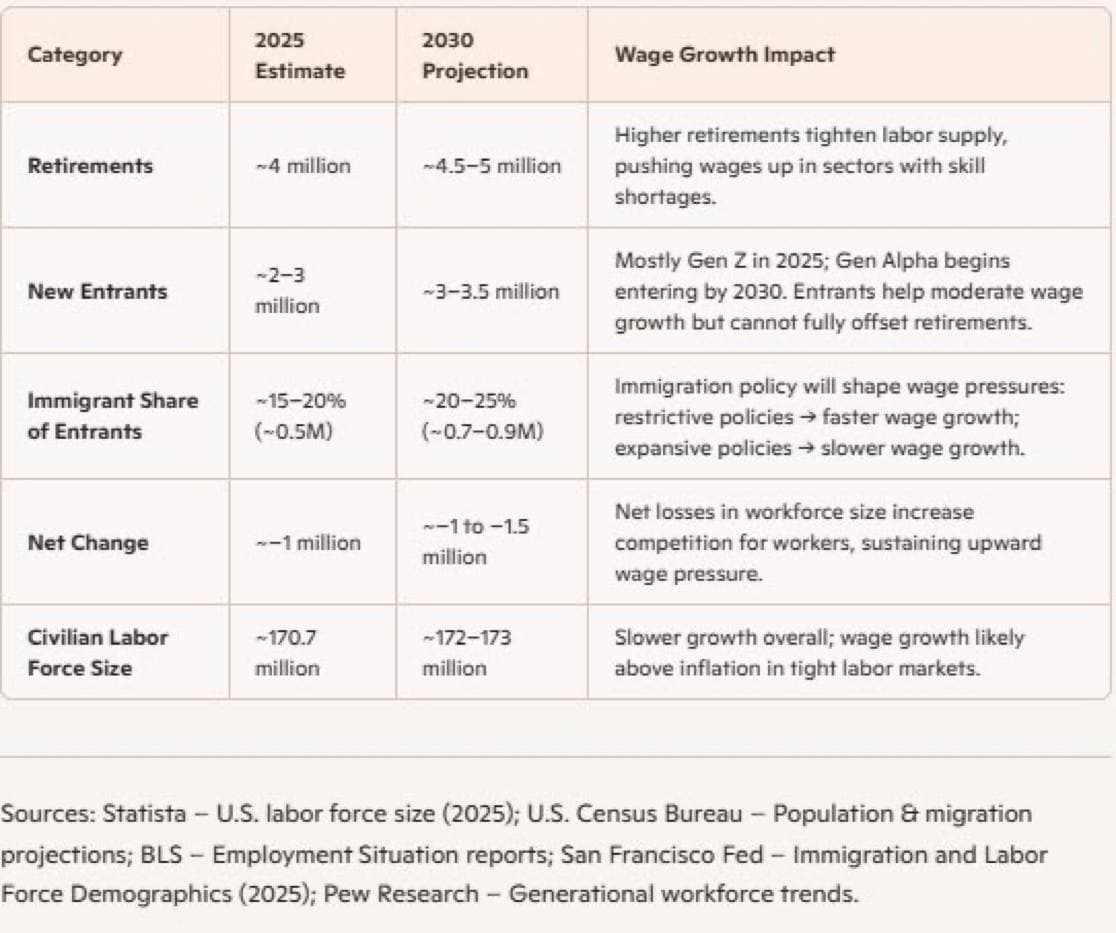
As the United States faces a significant demographic shift, projections indicate that retirements will soar, with an estimated 4.75 million individuals expected to retire by the year 2030. This trend is occurring concurrently with a decline in the labor force, as only approximately 3.25 million people are anticipated to enter the workforce during the same period. The implications of these retirements could lead to rapid wage growth, particularly if current immigration policies remain restrictive.
Key Details
The upcoming wave of retirements primarily involves baby boomers, a demographic cohort born between 1946 and 1964. This group includes both U.S.-born individuals and those who immigrated to the United States. Notably, the immigration boom that began in 1965 brought in around 10 million baby boomers from various countries, many of whom are now reaching retirement age. This influx occurred between the 1970s and 1990s, and these individuals are also expected to retire in significant numbers over the next decade.
By 2030, the disparity between the number of retirees and new entrants to the labor force is projected to create a labor shortage. With 4.75 million retirements expected and only 3.25 million new workers entering the labor market, the gap of 1.5 million could have profound effects on various sectors of the economy. This imbalance may lead to increased competition for available jobs, driving wages higher as employers seek to attract and retain talent.
Background
The baby boomer generation has significantly shaped the U.S. economy and society since their birth. As this large cohort begins to retire, the economic landscape is poised for transformation. The implications of their retirement extend beyond just workforce numbers; they also impact social security systems, healthcare demands, and consumer spending patterns. The combination of a declining workforce and an aging population raises critical questions about the sustainability of current economic models and the ability of younger generations to support the growing number of retirees.
What"s Next
As the U.S. approaches 2030, policymakers and businesses will need to address the challenges posed by this demographic shift. If immigration policies remain tight, the labor market may experience rapid wage growth as employers compete for a shrinking pool of workers. This scenario underscores the importance of reevaluating immigration strategies to ensure a balanced workforce that can support economic growth. The situation mirrors recent developments in other countries, such as the UK, where economic pressures are similarly influencing labor market dynamics. For instance, recent developments in the UK highlight how economic factors can drive policy changes in response to labor shortages.
In conclusion, the projected retirements of baby boomers in the United States signal a significant shift in the labor market. With millions set to exit the workforce, the nation must prepare for the economic implications of this transition, including potential wage increases and the need for strategic immigration reforms to maintain a robust labor force.



![[Video] Gunfire between Iraqi security forces and Sadr militias in Baghdad](/_next/image?url=%2Fapi%2Fimage%2Fthumbnails%2Fthumbnail-1768343508874-4redb-thumbnail.jpg&w=3840&q=75)