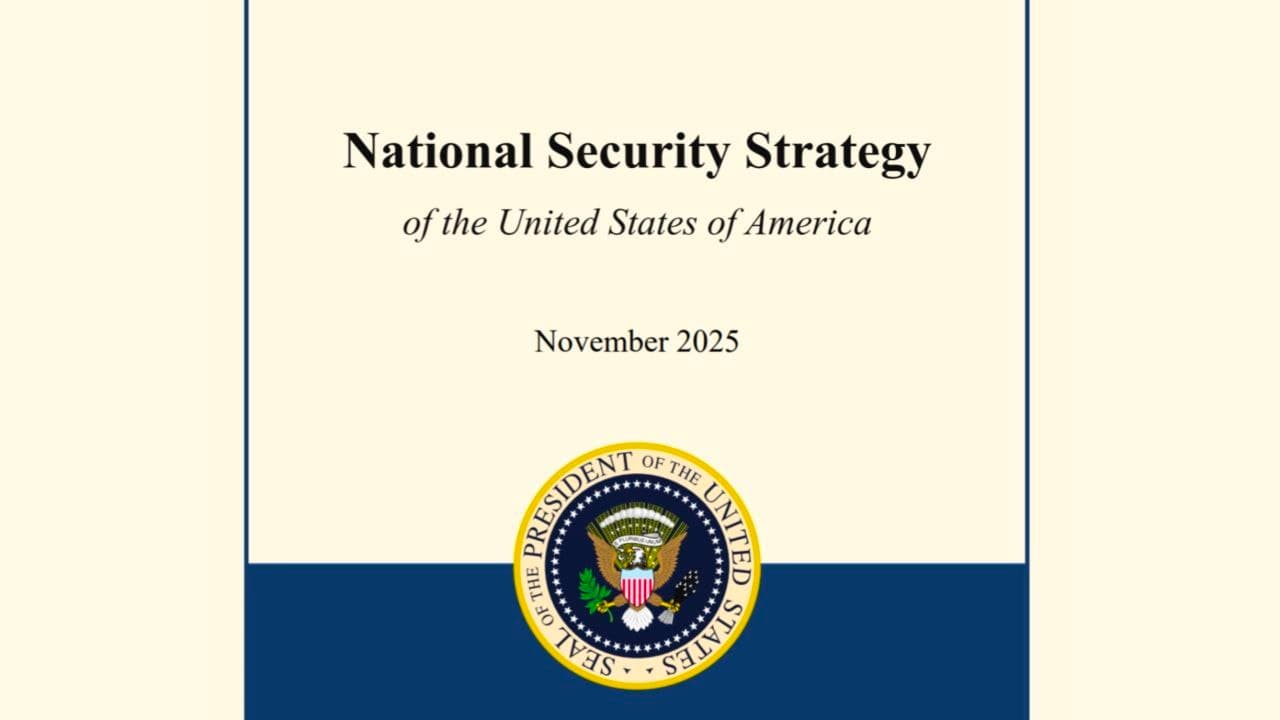
White House Unveils Updated National Security Strategy Emphasizing Burden-Sharing
On December 5, 2025, the Trump Administration released an updated U.S. National Security Strategy, marking a significant shift in the United States" approach to global governance. The new strategy declares the conclusion of America"s unilateral stewardship of the global order, stating, "The era of the United States carrying the global order alone is over." This document emphasizes a transition towards shared responsibilities with allied nations.
Key Details
The updated National Security Strategy includes a focused section on Europe, which outlines the continent"s "overwhelming hard-power advantages" over Russia, excluding nuclear capabilities. This assertion reflects a strategic assessment of military strengths and weaknesses in the context of ongoing geopolitical tensions. The document also highlights the severe and "irreparable rupture" in relations between the European Union (EU) and Russia, a consequence of the ongoing conflict in Ukraine, which has significantly altered the security landscape in Europe.
In light of these developments, the strategy calls for robust U.S. involvement in managing post-conflict stability in Ukraine. This includes efforts to avert further escalation of the conflict and to support Ukraine"s recovery in the aftermath of the war. The strategy criticizes European dependencies, particularly pointing out Germany"s vulnerabilities regarding energy supplies, which have been exacerbated by the conflict. Additionally, it addresses what it describes as unrealistic expectations from European nations regarding U.S. support, especially under the current fragile coalitions within the EU.
Background
The release of this updated National Security Strategy comes at a time of heightened geopolitical tensions, particularly in Europe due to Russia"s actions in Ukraine. The strategy reflects a broader reassessment of U.S. foreign policy priorities, moving away from a model that has traditionally relied on American leadership and unilateral action. Instead, it advocates for a more collaborative approach, encouraging allies to take on greater responsibilities in maintaining global stability.
This shift is particularly relevant given the context of recent military and political developments in various regions, including the Middle East and Africa. For instance, recent developments in Yemen illustrate the complexities of regional conflicts and the need for coordinated international responses.
What"s Next
The implications of this updated National Security Strategy are significant for U.S. foreign policy and international relations. By emphasizing burden-sharing with allies, the strategy may lead to increased diplomatic engagements and military collaborations with European nations and other allies. It also raises questions about the future of U.S. military presence in Europe and the extent to which the U.S. will continue to support Ukraine in its recovery efforts.
As the U.S. navigates this new approach, it will be essential to monitor how European nations respond to the call for greater responsibility and whether they can effectively manage their own security challenges without relying heavily on American support. The evolving dynamics in Europe, particularly in relation to Russia, will likely shape future discussions on defense and security cooperation among NATO allies.
In conclusion, the updated National Security Strategy represents a pivotal moment in U.S. foreign policy, signaling a shift towards a more collaborative approach in addressing global security challenges. The emphasis on burden-sharing may redefine the roles of both the U.S. and its allies in maintaining international stability in the years to come.

![[Video] Heavy clashes and gunfire reported in Baghdad, Iraq](/_next/image?url=%2Fapi%2Fimage%2Fthumbnails%2Fthumbnail-1768342239932-848qsh-thumbnail.jpg&w=3840&q=75)




![[Video] Gunfire between Iraqi security forces and Sadr militias in Baghdad](/_next/image?url=%2Fapi%2Fimage%2Fthumbnails%2Fthumbnail-1768343508874-4redb-thumbnail.jpg&w=3840&q=75)